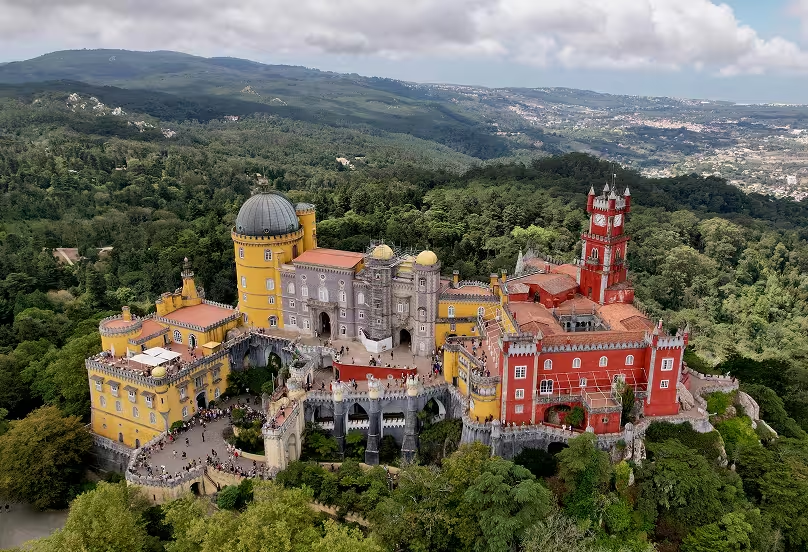
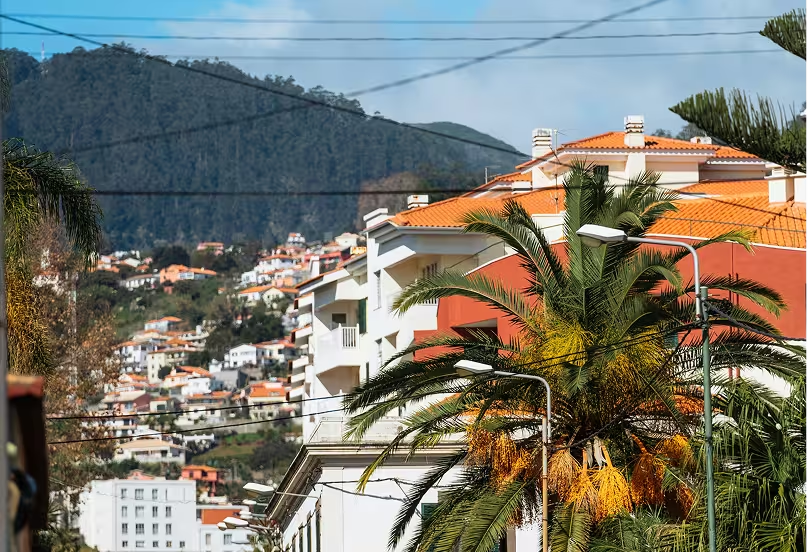
Madeira is a volcanic island in the Atlantic, closer to Africa than to Lisbon, where the mountains rise to 1,800 metres within a few kilometres of the sea and the weather in January is what northern Europe would call a good spring. It has laurel forest older than the last ice age, a capital built up an amphitheatre of hillside, and a network of irrigation channels that has become one of the best walking systems in the world.
It has also become, over the past five years, one of the places Europeans most seriously consider moving to. The remote-work wave that started with the Digital Nomad Village in Ponta do Sol did not recede, and the island's population of foreign residents has grown accordingly.
This guide covers what that actually costs. It uses registered sale prices rather than portal asking prices, sets out the regional tax position that most English-language coverage skips entirely, and is honest about the parts of island life that people underestimate.
Key Takeaways: Exploring Madeira in Six Steps
- Understand the tax position before anything else. Residents of Madeira pay personal income tax at rates up to 30% below mainland Portugal, as a permanent feature of the region's fiscal autonomy rather than a temporary scheme. This affects the arithmetic of moving here more than any other single factor, and almost no relocation guide mentions it.
- Know that small flats cost more per square metre than large ones. In Funchal the gap between the smallest and largest property types is the widest of any major municipality in Portugal. Buying a studio as an investment and buying a family home are opposite ends of the same market.
- Expect volatility, not a smooth climb. Madeira was one of only two Portuguese regions where prices fell year on year in late 2025, then Funchal posted the sharpest acceleration in the country in early 2026 while sales volumes dropped by a quarter. Small island markets move in steps.
- Budget around 1,900 to 2,600 euros a month for one person. Rent in Funchal is the swing factor and has risen steeply. Groceries, transport and eating out remain reasonable, and some imported goods cost more because everything arrives by sea or air.
- Decide between Funchal and the rest of the island. Funchal has the hospital, the schools, the services and the rental supply. Everywhere else is cheaper, quieter and effectively requires a car on roads that are steep and winding.
- Buy with representation, and expect to start from abroad. Most people who buy in Madeira are not living there when they begin. Ola Estate represents the buyer rather than the seller, searches the whole market, includes legal review of every contract, and can run a purchase remotely through power of attorney.
Madeira at a Glance
Madeira is a genuinely autonomous region with its own parliament and government, not simply a distant part of Portugal. The archipelago has been Portuguese since the 15th century and holds legislative powers of its own, which is why the tax rates below differ from the mainland's. It is inside the European Union, and Portuguese national law applies except where regional legislation adapts it.
The Tax Position, Which Most Guides Skip
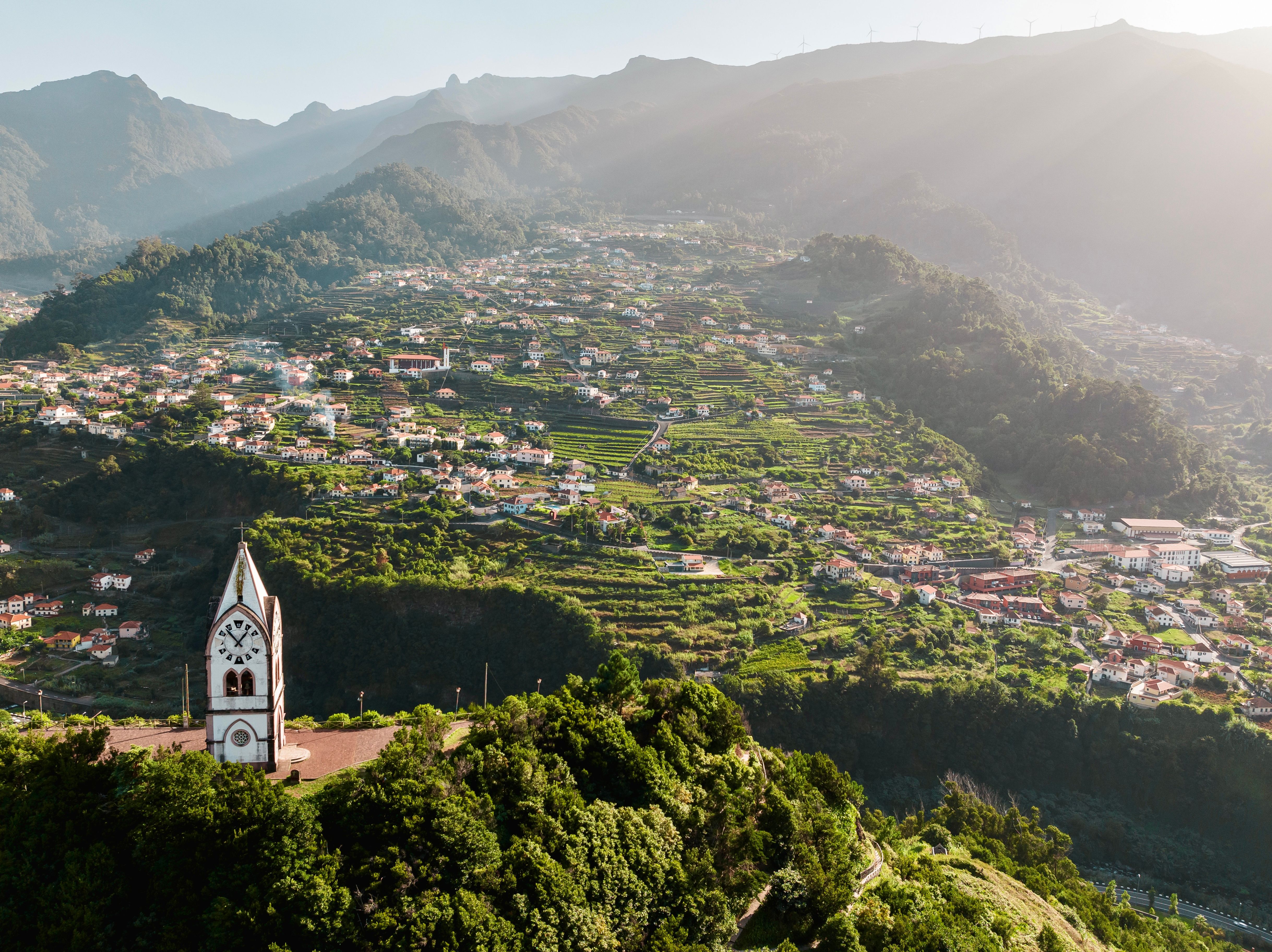
This is the section that changes the arithmetic, and it is missing from almost every English-language guide to moving to Madeira. Those guides tend to describe the International Business Centre or the incentive regimes for new arrivals. The bigger and simpler fact is that ordinary tax residents of Madeira pay less than ordinary tax residents of the mainland.
Personal income tax
Madeira sets its own personal income tax rates under the region's constitutional fiscal autonomy, applying a reduction against the national brackets. For 2026 the regional budget approves a new income tax rate table for residents of the region, confirming the maximum differential of 30% extended up to the ninth income bracket alongside the regional adaptation of the updated national brackets.
Three things follow from that, and they matter.
- It is structural, not temporary. This is not an incentive scheme with a ten-year clock and a qualification test. It is embedded in how the region sets tax, and it applies to qualifying residents generally.
- It applies broadly. The reduction is not limited to employment income; income taxed at flat rates under the code, including certain interest and dividends, generally benefits as well, subject to specific statutory exclusions.
- You must actually be tax resident in Madeira. The ordinary Portuguese residency tests apply, and your tax domicile has to be registered in the region. Owning a holiday flat in Funchal while living in Lisbon does not qualify you.
The regional government's own budget documents put the scale of this in context: the 2026 tax reductions are estimated to cost the regional budget around 222 million euros, of which roughly 148 million is personal income tax. That is a substantial transfer to residents, and it is the reason the tax line in a Madeira household budget looks different from a mainland one.
VAT and corporate tax
VAT rates in Madeira are lower than the mainland's across all three bands: 22% standard against 23%, 12% intermediate against 13%, and 4% reduced against 6%. The same rates apply on Porto Santo. The difference is modest on a single purchase and adds up across a year of ordinary spending.
For anyone setting up a business, the region's corporate tax rate for 2026 is 13.3%, with 10.5% on the first 50,000 euros of taxable income for small and medium enterprises, and 8.75% on the first 50,000 euros for qualifying startups and for companies based in the low-density municipalities of Porto Moniz, São Vicente, Santana and Porto Santo. The regional budget also extends the national incentive regime for scientific research and innovation to people becoming resident in Madeira from 1 January 2026.
Where the limits are
The autonomy is real but not unlimited. Regional policy has to align with the national state budget, and tax specialists in the region have noted that Madeira is already applying close to the maximum legally available reduction on income tax, while more room remains on VAT, where the standard rate could in theory fall further. In other words, do not plan around further income tax cuts, and do not assume the current position is permanent in every detail.
One important caveat. Everything above is a description of the published rates, not advice about your situation. Residency, double taxation treaties, pension income, capital gains and the interaction with your home country's rules all change the outcome, sometimes drastically. Ola Estate does not provide tax advice and works with trusted partners on this, and anyone weighing a move should get a proper opinion from a Portuguese tax professional before making decisions.
What Property Costs in Madeira
The registered numbers
The figures that matter are the ones registered with the tax authority when transfer tax is paid, published quarterly, with the first quarter 2026 release out on 17 July 2026.
Madeira is the fourth most expensive region in Portugal by registered price, behind Greater Lisbon, the Algarve and the Setúbal Peninsula, and ahead of the Porto metropolitan area. Funchal itself is comfortably above the national median and grew 23.0% year on year in the first quarter of 2026.
The size inversion, which is unique to Funchal
Here is the fact that no guide publishes, and it changes how you read every price you see.
Across the 12 months to March 2026, Funchal recorded the largest price gap by property size of any of the 24 municipalities with more than 100,000 inhabitants in Portugal. Small flats registered at 3,872 euros per square metre, while four-bedroom-and-larger properties registered at 2,072 euros per square metre. That is a difference of 1,800 euros per square metre, and it runs in the opposite direction to the intuition that bigger and better means dearer per square metre.
The explanation is the short-term rental market. A one-bedroom flat in Funchal with a sea view is an income-producing asset competing with buyers from across Europe, and it is priced accordingly. A large family house is competing for a much smaller pool of local buyers on local salaries. The consequences for you depend entirely on which side you are on:
- Buying small in Funchal means buying into the most competitive and most expensive part of the market, where you are bidding against investors rather than residents.
- Buying a large family home in Funchal is, per square metre, remarkably good value by the standards of any Portuguese city of comparable desirability.
If you are moving with a family and reading headlines about Funchal being expensive, this is the detail that may change your conclusion.
A market that moves in steps
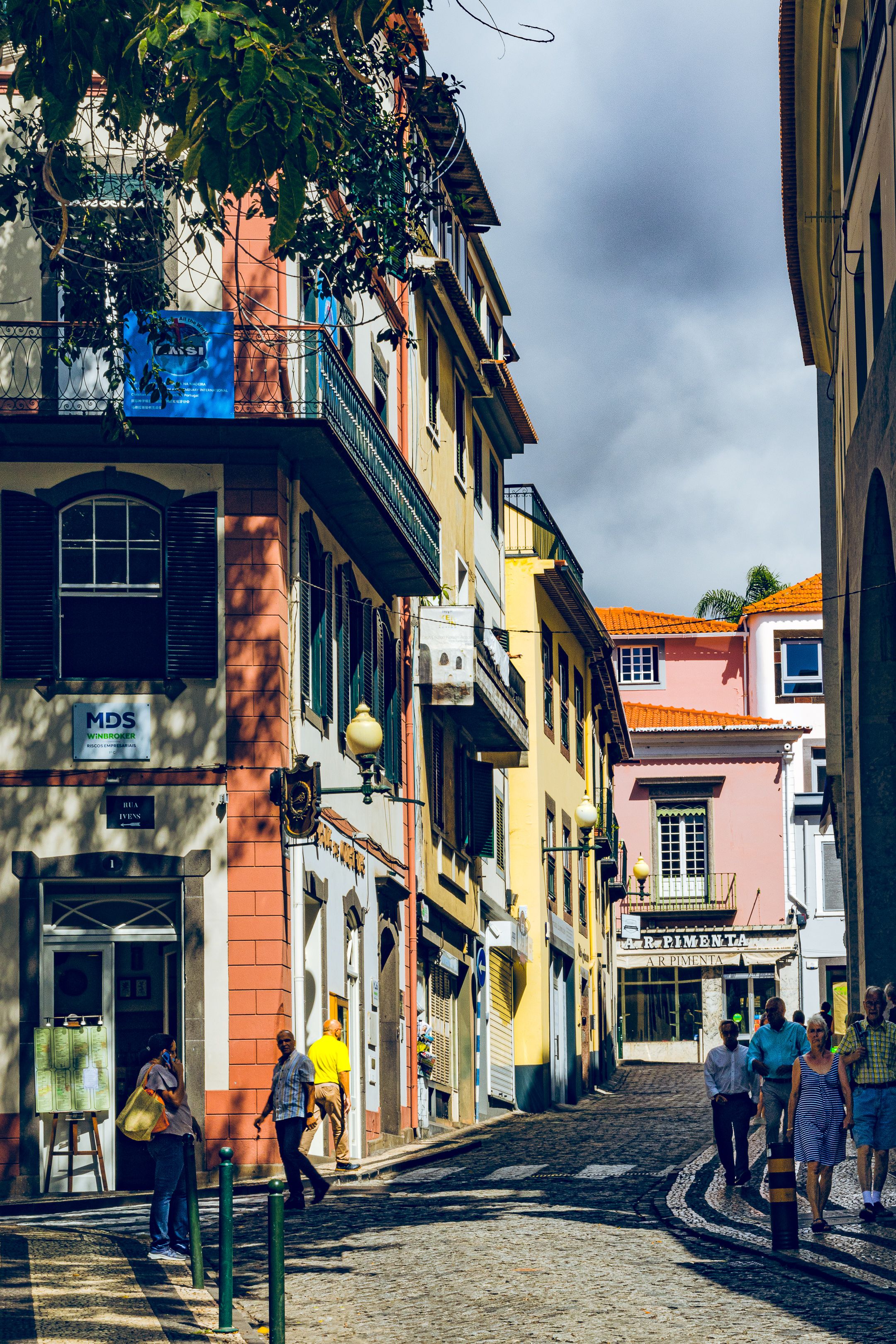
Madeira's property market is small, and small markets are volatile. The recent sequence makes the point:
- In the fourth quarter of 2025, Madeira was one of only two Portuguese sub-regions where registered prices fell year on year, down 8.3%, at a time when prices were rising almost everywhere else in the country.
- In the first quarter of 2026, Funchal recorded the largest acceleration of any of the 24 large municipalities, with its year-on-year growth rate jumping by more than 25 percentage points.
- Over the same quarter, transaction volumes in Madeira fell 24.2% year on year, the steepest decline of any sub-region in Portugal.
Fewer sales at higher prices, after a period of falling prices, is a thin and choppy market rather than a steady boom. In practice this means comparable evidence is scarcer than on the mainland, individual transactions swing the averages, and the gap between a well-negotiated purchase and a poorly negotiated one is wider. It is an argument for local knowledge, not for staying away.
Who is buying
In the first quarter of 2026, buyers with a foreign tax domicile paid a median of 3,295 euros per square metre in Madeira against 2,810 for buyers domiciled in Portugal, a difference of about 17%. That is a real premium, though noticeably smaller than the 34.5% recorded in Greater Lisbon over the same period. Foreign demand is concentrated in Funchal and in the sunnier south and west of the island.
Where the cheaper property is
Prices fall sharply once you leave Funchal and the immediately adjacent south coast. The north of the island, around São Vicente, Santana and Porto Moniz, is cooler, greener, wetter and considerably cheaper, and those municipalities also carry the lowest corporate tax rate in the region. Machico, Santa Cruz and Câmara de Lobos sit in between, close enough to Funchal to be practical. Porto Santo, the smaller island with the long sandy beach, is a separate market again, seasonal and quiet out of summer.
What you pay on top of the price
Budget separately for IMT, the transfer tax; stamp duty at 0.8%; notary and land registry fees; legal review; mortgage costs if borrowing; and IMI, the annual municipal property tax, from the following year. You need a Portuguese tax number before signing the promissory contract, and we cover the transfer tax bands, the NIF process and non-resident mortgages in separate guides. Because most Madeira buyers begin the process from another country, it is worth knowing the whole purchase can be completed remotely through a power of attorney.
Two island-specific points. Building on steep volcanic terrain is expensive and access matters, so check how you actually reach the property and what the parking situation is, because level ground is scarce. And older properties in the humid north can carry damp problems that are less common on the drier south coast.
Renting in Madeira
The official numbers
The median rent on new contracts in Madeira was 11.97 euros per square metre in the first quarter of 2026. That makes it the second most expensive region in the country to rent, behind Greater Lisbon at 14.38 and ahead of the Setúbal Peninsula, the Algarve and the Porto metropolitan area.
That ranking surprises people, and it is the clearest evidence that Madeira has stopped being a cheap alternative. The island's rental stock is limited, a large share of it earns more as holiday accommodation, and the arrival of remote workers added demand that supply has not matched.
Typical monthly asking rents, from listing data rather than official statistics:
The practical difficulties
- Long-term supply is genuinely tight, particularly in central Funchal and in Ponta do Sol where remote workers concentrate. Good listings move within days.
- Many landlords prefer short lets. As in the Algarve, holiday letting pays more, so confirm you are signing a genuine residential lease registered with the Tax Authority rather than a seasonal arrangement.
- Look outside the capital. São Gonçalo and Santo António within greater Funchal, and Santa Cruz, Machico, Câmara de Lobos, Ribeira Brava and Calheta beyond it, cost meaningfully less. The trade-off is a car.
- Expect a deposit of two to three months plus the first month in advance, and to provide a tax number, proof of income and identification. We have a separate guide on the documents required.
The 2026 national rental reforms apply here as elsewhere: the 2% cap on new contracts was repealed, existing contracts follow the 2.24% annual coefficient, and tenants can deduct up to 900 euros of rent against income tax on qualifying registered leases.
Cost of Living in Madeira in 2026
Madeira is cheaper than northern Europe and no longer cheaper than much of mainland Portugal, with housing the main reason. The ranges below are working estimates and assume year-round living in or near Funchal.
The island premium, and the island discount
- Some things cost more. Imported goods, cars, electronics and furniture carry a shipping cost, and choice is narrower than on the mainland. Ordering online often means higher delivery charges and longer waits, and some retailers do not ship to the islands at all.
- Some things cost less. Local produce, fish, fruit and vegetables are cheap and excellent. Eating out is good value by mainland standards. Heating costs are minimal because the climate rarely requires it, which is a real annual saving compared with Lisbon or Porto.
- Flights are a permanent budget line. Visiting family or reaching the mainland means flying, and prices rise steeply in summer and at Christmas. Residents get a subsidy on flights to the mainland, which is worth understanding once you are registered.
Healthcare and schools
The regional health service operates the main hospital in Funchal and health centres across the island, and legal residents can register in the usual way. For anything highly specialised, transfer to the mainland is sometimes necessary, which is a genuine consideration for people with complex medical needs. Private clinics and insurance are available and inexpensive by international standards. International schooling exists in Funchal but the choice is narrower than in Lisbon, which is one of the more common reasons families with older children decide against the island.
Work and income
The regional economy runs on tourism, and local salaries reflect that. The national minimum wage in 2026 is 920 euros gross a month, netting 818.80, and the average monthly wage was 1,694 euros in 2025, though the region has historically sat below the national average. Most foreign residents live on remote income, pensions or their own businesses rather than competing for local jobs. Internet infrastructure is good, coworking spaces are well established in Funchal and Ponta do Sol, and the remote-work community is one of the reasons people find the island easy to settle into.
Where to Live in Madeira
Funchal or elsewhere
Funchal is where the hospital, the schools, the shops, the coworking spaces and almost all the year-round rental supply are, and it is the only place on the island where you can live comfortably without a car. It is built up a steep hillside, so the flat you like on the map may be a punishing walk from the shops. Rents and small-flat prices are the highest on the island.
Everywhere else is cheaper and quieter, and everywhere else needs a car. The pattern many residents follow is to start in Funchal for the first year while learning the island, then move out for space once they know which side of the island suits them. The south is sunnier and drier, the north is wetter and greener, and the difference between them on the same day can be dramatic.
Getting Around Madeira
- Roads. The island is engineered around tunnels and viaducts, and the modern express roads make journeys that once took hours take minutes. Off those roads, expect steep gradients, tight hairpins and narrow village streets. Driving here is not difficult but it demands attention, and an automatic is worth considering.
- Buses. Funchal has a decent urban network and there are regional services across the island, but frequencies outside the capital are geared to residents' schedules rather than convenience.
- The airport. Cristiano Ronaldo Madeira International at Santa Cruz is known for its runway on stilts and for crosswinds that occasionally divert flights to Porto Santo or the Canaries. It is a genuine, if infrequent, feature of island life. Connections to mainland Portugal, the UK, Germany and elsewhere in Europe are good, and the EU Entry/Exit System has applied since 10 April 2026, replacing passport stamps with biometric records for non-EU short-stay travellers.
- Porto Santo. Reached by ferry from Funchal in about two and a half hours, or by a short flight.
What to See and Do
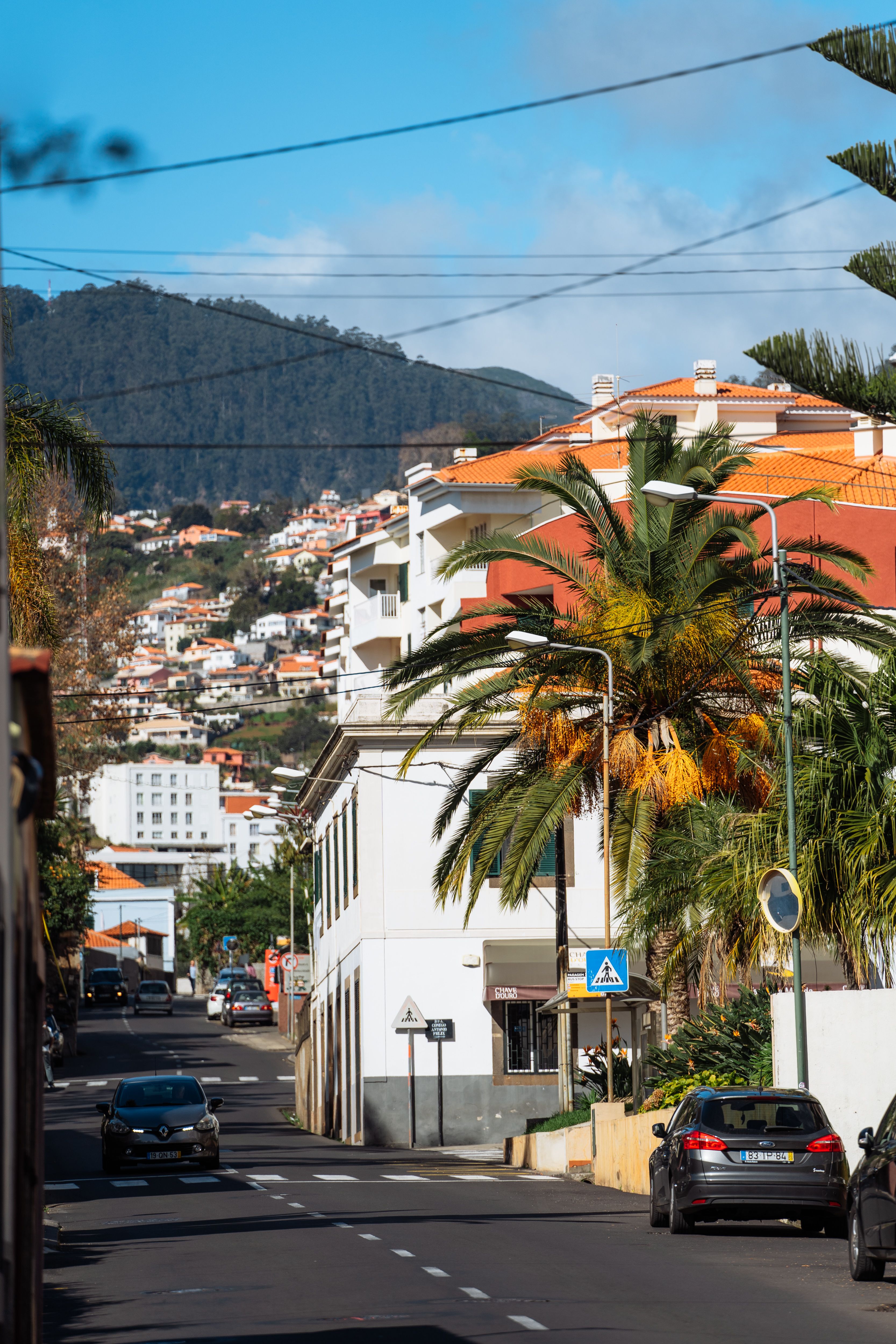
The levadas
The reason many people fall for the island. Madeira's irrigation channels, built from the 15th century onward to carry water from the wet north to the dry south, run for around 2,000 kilometres across the mountains, and the maintenance paths alongside them have become a walking network with few equals. They range from flat, easy family walks to routes along cliff edges and through unlit tunnels where a torch is essential. The Caldeirão Verde, the 25 Fontes and the Levada do Rei are among the best known.
The mountains
The central massif rises above 1,800 metres at Pico Ruivo, reached on foot from Pico do Arieiro along one of the most spectacular ridge walks in Europe, often above the clouds. The interior is a different island from the coast: colder, wilder and frequently in mist.
The laurel forest
The Laurissilva is a relict subtropical forest that once covered much of southern Europe and now survives in Macaronesia, and Madeira holds the largest remaining area. It is a UNESCO World Heritage Site and it is genuinely ancient, damp, mossy woodland unlike anything on the mainland.
Funchal and the coast
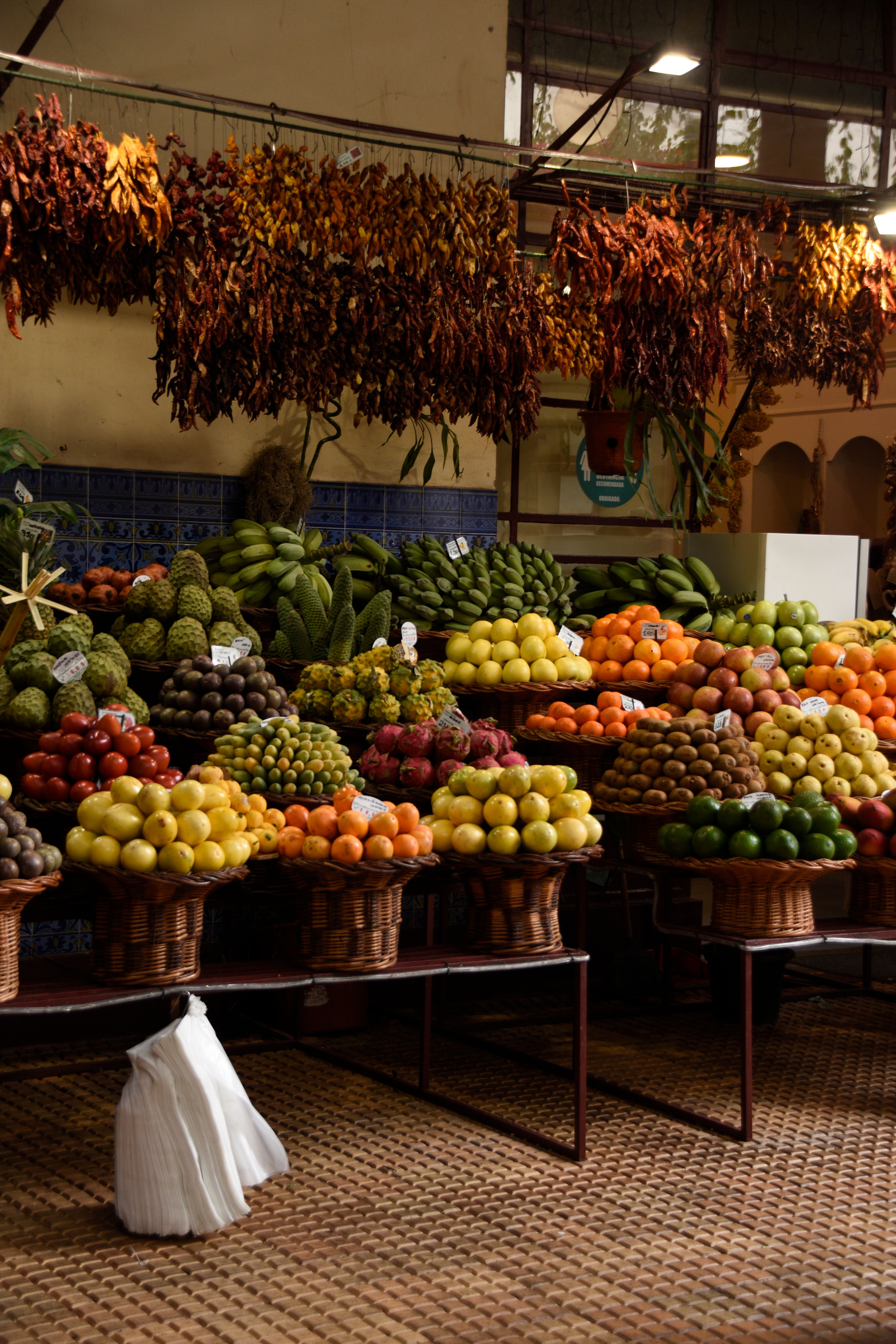
- The old town and the painted doors of Rua de Santa Maria, plus the Mercado dos Lavradores for produce, fish and flowers.
- Monte, reached by cable car above the city, for the tropical gardens and the wicker toboggan ride down, in which two men in white steer a basket sledge on the road.
- Madeira wine lodges, where the fortified wine that gave the island its name is aged in heat, a method that makes it nearly indestructible once opened.
- Cabo Girão, one of the highest sea cliffs in Europe, with a glass platform over the drop.
- Porto Moniz, in the northwest, for the natural volcanic swimming pools in the lava rock.
- Whale and dolphin watching off the south coast, which is reliable year-round.
Beaches, and managing expectations
Madeira is volcanic, so its natural beaches are pebble and black sand rather than golden. Calheta and Machico have imported-sand beaches, and there are excellent sea pools and bathing complexes cut into the rock along the coast. If a wide sandy beach is essential, that is on Porto Santo, which has nine kilometres of it, and which is why islanders go there in summer.
The calendar
Carnival in February is a serious event in Funchal. The Flower Festival in spring fills the streets with floral floats and carpets. And Funchal's New Year fireworks display is among the largest in the world, which is why the island is fully booked over Christmas and New Year.
What Changed in Madeira in 2026
- The regional tax reduction was extended. The 2026 regional budget confirms the maximum 30% income tax differential up to the ninth bracket, with corporate tax at 13.3% and lower rates for SMEs, startups and the low-density municipalities.
- Prices swung sharply. After falling year on year in late 2025, Funchal recorded the largest price acceleration of any large Portuguese municipality in the first quarter of 2026.
- Sales volumes dropped. Transactions in Madeira fell 24.2% year on year in the first quarter, the steepest decline of any sub-region in the country.
- Rents confirmed second place nationally. At 11.97 euros per square metre on new contracts, Madeira ranks behind only Greater Lisbon.
- The national rental law was reformed, repealing the 2% cap on new contracts and introducing the tenant rent tax deduction.
- Border procedures changed. The EU Entry/Exit System became fully operational on 10 April 2026, with ETIAS expected later in the year.
Things People Get Wrong About Madeira
- That the tax advantage is only for special regimes. Ordinary residents pay less than on the mainland, structurally.
- That it is a cheap alternative to the mainland. It has the second highest new-contract rents of any Portuguese region.
- That bigger property costs more per square metre. In Funchal it is the reverse, by a wide margin.
- That it is a retirement island. The median resident foreigner today is as likely to be a remote worker in their thirties as a retiree.
- That the beaches are sandy. They are volcanic. The sand is on Porto Santo.
- That you can manage without a car outside Funchal. You generally cannot.
- That the weather is the same across the island. The north and the south can differ completely on the same day, and the mountains have their own conditions.
Frequently Asked Questions
Do you pay less tax in Madeira?
Residents of Madeira pay personal income tax at rates up to 30% below mainland Portugal, as a structural feature of the region's fiscal autonomy rather than a temporary incentive, and VAT is also lower at 22%, 12% and 4%. You must be genuinely tax resident with your tax domicile registered in the region. The outcome in any individual case depends on your income types, residency and treaty position, so take professional tax advice.
Is Madeira expensive to live in?
Moderately. A single person should budget roughly 1,900 to 2,600 euros a month including rent, a couple 2,500 to 3,400 and a family of four 3,400 to 4,700. Rent is the main cost and Madeira has the second highest new-contract rents in Portugal. Food, eating out and heating are cheaper than on the mainland, while imported goods and flights add up.
How much does property cost in Madeira?
Funchal registered a median of 3,601 euros per square metre in the first quarter of 2026 and the region as a whole 2,863, against a national 2,337. Within Funchal, small flats registered around 3,872 euros per square metre and large properties around 2,072, so the size of what you buy changes the per-square-metre price more than in any other large Portuguese municipality.
Where is the cheapest place to live in Madeira?
The north coast, around São Vicente, Santana and Porto Moniz, is the cheapest and also the wettest and greenest. Machico, Santa Cruz, Ribeira Brava and Calheta offer a middle position with better weather and reasonable access to Funchal. Porto Santo is cheap but very quiet outside summer.
Can foreigners buy property in Madeira?
Yes, with no restriction by nationality or residency, and the region has a high share of foreign buyers. You need a Portuguese tax number, and non-residents face different transfer tax treatment and stricter mortgage terms. The purchase can be completed remotely through a power of attorney.
Is Madeira good for digital nomads?
It is one of the better-established options in Europe. The Digital Nomad Village in Ponta do Sol created a real community that has persisted, internet is fast and reliable, coworking is available in Funchal and Ponta do Sol, and the climate supports outdoor life year-round. The constraints are rental supply, the cost of flights, and the fact that it is an island.
What is the weather like in Madeira in winter?
Mild. Daytime temperatures in Funchal typically sit between about 16 and 20 degrees through the winter, with sunshine on the south coast and more rain and cloud in the north and the mountains. It is one of the main reasons people move here.
Do you need a car in Madeira?
In central Funchal, no. Anywhere else, effectively yes. Bus services outside the capital are limited, and the terrain makes walking between places impractical.
Is Madeira safe?
Portugal is among the safest countries in the world and Madeira is no exception, with very low violent crime. Ordinary care in tourist areas is enough. The genuine risks on the island are outdoor ones: cliffs, weather in the mountains, and Atlantic sea conditions.
How long does it take to fly to Madeira?
About an hour and forty minutes from Lisbon, and roughly four hours from the UK, Germany and much of northern Europe. Flights to the mainland are the practical link, and residents receive a subsidy on those routes.
Finding a Home in Madeira
Madeira rewards people who look past the headline numbers. The tax position changes the cost of living more than any budget line. The market is thin enough that comparable evidence is scarce and negotiation matters. And a small flat and a family house in the same street are priced by two completely different sets of buyers.
Ola Estate works across Portugal including Madeira, in English, Portuguese and Russian. We search the whole market rather than one agency's listings, represent the buyer or the tenant rather than the seller, have our lawyers review every contract before you sign, and, because most people buying here start from another country, can run the entire purchase remotely through a power of attorney with video tours. For tax questions we put clients in touch with trusted specialist partners rather than advising ourselves.
Tell us your budget, whether you need Funchal or want space outside it, and what the move has to achieve, and we will come back with a shortlist that fits.
Table of content
Discover more regions
Discover more practical guides and local insights
Explore the Algarve: Property Prices, Rent, Cost of Living and Where to Live in 2026
Experience the beauty of the Algarve with our expert guidance.
Explore Coimbra: Property Prices, Rent, Cost of Living and What to Do in 2026
Let our Coimbra experts guide you. We’ll be with you every step of the way, advocating for your best interests.